We Use CookiesWe use cookies to enhance the security, performance, functionality and for analytical and promotional activities. By continuing to browse this site you are agreeing to our privacy policy

Best 3D Scanners

From leading brands and best sellers available on the web.
#1

Winner

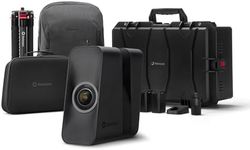
Matterport Pro3 3D Lidar Scanner Di

Matterport

Matterport Pro3 3D Lidar Scanner Digital Camera Performance Kit for Professional 3D Virtual Tours 360 4K Photography Indoor Outdoor Scanning for Construction Engineering

View on Amazon
#2
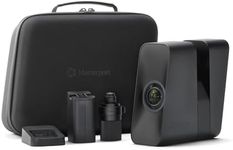
Matterport Pro3 3D Lidar Scanner Di

Matterport

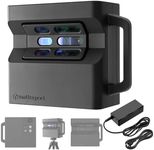
Matterport Pro3 3D Lidar Scanner Digital Camera for Creating Professional 3D Virtual Tour Experiences with 360 Views and 4K Photography for Indoor and Outdoor Spaces with Trusted Accuracy
View on Amazon
#3
Matterport MC250 Pro2 Professional

Matterport

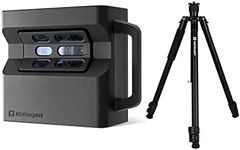
Matterport MC250 Pro2 Professional 3D Camera Bundle - High Precision for Virtual Tours, Create 3D Maps, Models, and Schematics, View Footage in 3D and VR Applications (Renewed)
View on Amazon
#4
Matterport Pro2 3D Camera and Tripo

Matterport

Matterport Pro2 3D Camera and Tripod Bundle - High Precision for Virtual Tours, 3D Mapping, & Digital Surveys with 360 Views and 4K Photography with Trusted Accuracy (Renewed)
View on Amazon
#5
EinScan Rigil 3D Scanner for Revers

EinScan

EinScan Rigil 3D Scanner for Reverse Engineering Wireless Portable Handheld

View on Amazon
#6
Creality CR-Scan Raptor Pro 3D Scan

CREALITY FALCON

20%OFF

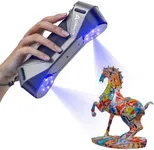
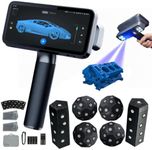
Creality CR-Scan Raptor Pro 3D Scanner for 3D Printing - 60fps High-Speed - 22+7 Blue Laser Blue Laser & NIR - 0.02mm Accuracy - 24-Bit Full - Scans Objects Between 0.2-157"
View on Amazon
#7
EinScan Rigil Lite Limited Edition

EinScan

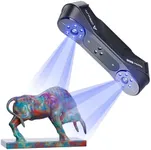
EinScan Rigil Lite Limited Edition Handheld 3D Scanner for 3D Printing 32GB RAM 1TB Storage – Wireless Hybrid Laser IR Digitizer with 17+17 Crossed Lines Full Color Capture Scanner for Modeling
View on Amazon
#8
Creality 3D Scanner CR-Scan Raptor

Creality

20%OFF

editor-choice-ribbon

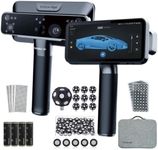
Creality 3D Scanner CR-Scan Raptor Pro for 3D Printing, 22+7 Blue Laser & NIR Handheld Scanner 0.02mm Accuracy, 60fps High-Speed & 5MM to 4M Objects, 24-Bit Full-Color Scanning for Windows macOS
View on Amazon
#9
Shining3D EinScan Rigil 3D Scanner

Go3DPro

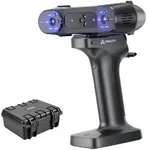
Shining3D EinScan Rigil 3D Scanner - Wireless & All-in-One Portable Scanner with Scanning Software, 0.04mm Accuracy, 50 Laser Lines for Reverse Engineering, Manufacturing, Art and Design
View on Amazon
#10
Creality 3D Scanner Raptor Pro and

Creality

editor-choice-ribbon

Creality 3D Scanner Raptor Pro and Scan Bridge Wireless Scanning, 3D Scanner for 3D Printing, High Precision 0.02mm, 60FPS Scanning Speed, 22+7 Blue Laser Lines

View on Amazon
How do we rank products for you?

Our technology thoroughly searches through the online shopping world, reviewing hundreds of sites. We then process and analyze this information, updating in real-time to bring you the latest top-rated products. This way, you always get the best and most current options available.

headphones-stars

Most Popular Categories Right Now

Buying Guide for the Best 3D Scanners

Choosing the right 3D scanner can be a game-changer for your projects, whether you're into product design, quality control, or even art and heritage preservation. The key to finding the best fit for you is understanding the different specifications and how they align with your specific needs. Here are some important specs to consider when selecting a 3D scanner.
ResolutionResolution refers to the level of detail that the 3D scanner can capture. It's measured in microns (µm) or millimeters (mm). Higher resolution means more detailed scans, which is crucial for applications requiring precision, like engineering or medical modeling. For general use or larger objects, a lower resolution might suffice. If your work involves intricate details, opt for a scanner with higher resolution.
AccuracyAccuracy is the degree to which the scanned data matches the actual object. It's typically measured in microns (µm). High accuracy is essential for applications like reverse engineering, quality control, and any field where exact measurements are critical. For artistic or less precision-dependent projects, slightly lower accuracy might be acceptable. Choose a scanner with accuracy that meets the demands of your specific application.
Scan SpeedScan speed indicates how quickly the scanner can capture data, usually measured in points per second or frames per second. Faster scan speeds are beneficial for scanning large objects or when time is a critical factor. If you need to scan multiple objects quickly or work in a fast-paced environment, look for a scanner with a high scan speed. For occasional or detailed scans, speed might be less of a priority.
PortabilityPortability refers to how easy it is to move and use the scanner in different locations. Portable scanners are typically lighter and more compact, making them ideal for fieldwork or on-site scanning. If you need to scan objects in various locations or require a scanner that can be easily transported, consider a portable model. For stationary use in a controlled environment, portability might be less important.
Scanning RangeScanning range is the distance over which the scanner can effectively capture data. It can vary from a few centimeters to several meters. A longer scanning range is useful for capturing large objects or entire environments, while a shorter range is better for small, detailed items. Determine the typical size of the objects you will be scanning to choose a scanner with an appropriate range.
Software CompatibilitySoftware compatibility refers to the scanner's ability to work with different software programs for processing and editing the scanned data. Some scanners come with proprietary software, while others are compatible with a range of third-party applications. Ensure that the scanner you choose is compatible with the software you plan to use, and consider the ease of use and features of the included software.
Ease of UseEase of use encompasses the user-friendliness of the scanner, including setup, operation, and data processing. A scanner that is easy to use can save time and reduce the learning curve, especially for beginners. Look for features like intuitive interfaces, clear instructions, and good customer support. If you're new to 3D scanning, prioritize a model known for its ease of use.