Buying Guide for the Best Ph Meters
Choosing the right pH meter is crucial for ensuring accurate and reliable measurements, whether you're using it for scientific research, gardening, aquariums, or any other application. A pH meter measures the acidity or alkalinity of a solution, and selecting the right one involves understanding your specific needs and the key specifications that differentiate various models. Here are the key specs to consider when choosing a pH meter and how to navigate them to find the best fit for you.AccuracyAccuracy refers to how close the pH meter's readings are to the true pH value of the solution. This spec is important because it determines the reliability of your measurements. Accuracy is usually expressed in ± pH units, such as ±0.01 or ±0.1. For highly precise applications like laboratory research, you should look for a pH meter with an accuracy of ±0.01. For less critical applications, such as gardening or aquariums, an accuracy of ±0.1 may be sufficient. Your need for precision will guide you in choosing the right level of accuracy.
RangeThe range of a pH meter indicates the span of pH values it can measure, typically from 0 to 14, which covers the full spectrum of acidity and alkalinity. This spec is important because it determines whether the pH meter can measure the pH levels you are interested in. Most pH meters cover the full range, but some specialized meters may have a narrower range. Ensure the pH meter you choose can measure the pH levels relevant to your application, whether it's for highly acidic solutions, neutral solutions, or highly alkaline solutions.
ResolutionResolution refers to the smallest change in pH that the meter can detect and display. This spec is important for applications where small changes in pH need to be monitored. Resolution is typically expressed in pH units, such as 0.01 or 0.1. For applications requiring detailed monitoring, such as scientific experiments, a higher resolution (0.01) is preferable. For general use, such as checking the pH of soil or water, a lower resolution (0.1) may be adequate. Consider how fine-tuned your measurements need to be when selecting the resolution.
CalibrationCalibration is the process of setting the pH meter to known pH values to ensure accurate readings. This spec is important because regular calibration maintains the accuracy of the meter. pH meters can have manual or automatic calibration. Manual calibration requires you to adjust the meter using calibration solutions, while automatic calibration simplifies the process by adjusting itself. If you prefer ease of use and convenience, an automatic calibration feature is beneficial. However, if you are comfortable with manual adjustments and want more control, a manual calibration meter may be suitable.
Temperature CompensationTemperature compensation adjusts the pH reading based on the temperature of the solution, as pH can vary with temperature. This spec is important for ensuring accurate readings in varying temperature conditions. Some pH meters have automatic temperature compensation (ATC), which adjusts the reading automatically, while others require manual input of the temperature. If you are working in environments with fluctuating temperatures or need precise measurements, a pH meter with ATC is recommended. For stable temperature conditions, manual temperature compensation may suffice.
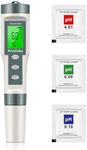
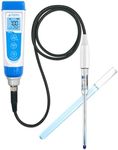
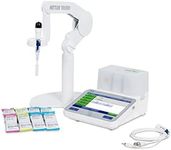
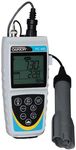
PortabilityPortability refers to the ease with which you can transport and use the pH meter in different locations. This spec is important if you need to take measurements in the field or move the meter frequently. Portable pH meters are typically compact, lightweight, and battery-operated, making them ideal for on-the-go use. Benchtop pH meters, on the other hand, are larger and designed for stationary use in laboratories. Consider where and how you will be using the pH meter to determine whether a portable or benchtop model is more suitable for your needs.
DurabilityDurability refers to the pH meter's ability to withstand harsh conditions, such as exposure to water, chemicals, or physical impact. This spec is important for ensuring the longevity and reliability of the meter in demanding environments. Some pH meters are designed to be waterproof, dustproof, or shock-resistant. If you are using the pH meter in rugged or outdoor conditions, look for a model with enhanced durability features. For controlled environments like laboratories, standard durability may be sufficient.